BDFHYK Ignition Coils UF802 and Iridium Spark Plug 91970 Fits For Chevrolet Equinox Malibu Cruze GMC Terrain, l4 1.4L,3 Set of 4
Regular price
$72.99
Product Detail
- Type Ignition Coil + Spark Plug Set
- SKU BDDLZ-BD-05-07862-CK
- OE Number
- OE Number For
Estimated Delivery:
Calculating...
·
Ships by
Calculating...
·
Free Shipping
Trust & Assurance
Free Shipping · 2–7 Business Days
12-Month Warranty
30-Day Return
Secured Payment
UF802 Ignition Coil & 91970 Laser Iridium Spark Plug Kit for GM L4
Cold-start shaking, rough idle, hard starting, or hesitation under acceleration can involve worn ignition components, but similar symptoms may also come from wiring, injectors, fuel delivery, intake leaks, sensors, compression, or mechanical faults. This BDFHYK UF802 ignition service kit is intended for the listed applications below. Confirm the exact vehicle, engine, connector, spark plug reference, and service quantity before ordering.
UF802 / 91970 / ILNAR8B7G Vehicle Fitment
- Buick Encore 2016–2019 — listed 1.4L L4 applications
- Chevrolet Cruze 2016–2019 — listed 1.4L L4 gasoline applications
- Chevrolet Equinox 2018–2020 — listed 1.5L L4 applications
- Chevrolet Malibu 2016–2019 — listed 1.5L L4 applications
- GMC Terrain 2018–2020 — listed 1.5L L4 applications
What Is Included?
- 4 ignition coils
- 4 Laser Iridium spark plugs
UF802 Ignition Coil Reference Numbers
UF802, 12635672, 12670053, 12697989, GN10797, C-939, C2036
When Should You Inspect the Ignition Coils?
Ignition coils do not have one universal mileage-based replacement interval. Inspect them when spark plug service is due, when an older vehicle reaches higher-mileage service, or when symptoms appear. If service history is unknown, roughly 60,000–100,000+ miles is a useful inspection window for coil boots, connectors, plug wells, spark plug wear, and stored misfire codes—not an automatic replacement point.
Frequent short trips, stop-and-go driving, high-load use, long idling, repeated heat cycles, or oil and moisture in the plug wells can justify earlier inspection. Worn spark plugs can also increase voltage demand on the ignition coils.
What May Improve After Replacing a Confirmed Weak Coil or Worn Plug?
- More stable idle if weak spark was causing rough running
- More consistent starting if ignition energy had become marginal
- Smoother acceleration or load response if misfire was ignition-related
- Fewer cylinder-specific misfire events after the actual failed component is corrected
These are restoration benefits, not a promise of extra horsepower or guaranteed fuel-economy gains.
High-Mileage Ignition Service Scenarios
Spark Plug Service Is Due
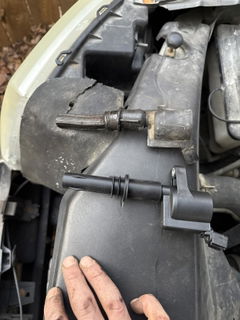
Inspect the coils while the plugs are being serviced for cracked housings, carbon tracking, damaged boots, loose connectors, oil contamination, or moisture. Replace coils when testing or physical condition supports replacement rather than replacing them by mileage alone.
Cold-Start Shaking or Rough Idle
Check cylinder-specific misfire codes and inspect the plug and coil on the affected cylinder. A flashing check-engine light can indicate an active misfire and should be addressed promptly.
Hesitation Under Acceleration or Load
A marginal coil or worn plug may become more noticeable as cylinder pressure rises under acceleration. Confirm the affected cylinder and component condition before replacement.
Fitment & Installation Checks
- Match the exact year, make, model, engine, and cylinder configuration.
- Compare connector keying, coil body, mounting point, boot profile, and printed reference numbers.
- Confirm spark plug reference 91970 / ILNAR8B7G for the exact engine.
- Follow the exact vehicle service specification for spark plug gap and tightening torque.
- Inspect wiring, connectors, boots, and plug wells for oil, moisture, corrosion, or physical damage.
Important: These are BDFHYK OE-style aftermarket ignition service components, not factory-branded parts. A diagnostic trouble code alone does not prove that an ignition coil has failed.


BDFHYK Ignition Coils UF802 and Iridium Spark Plug 91970 Fits For Chevrolet Equinox Malibu Cruze GMC Terrain, l4 1.4L,3 Set of 4
Regular price
$72.99